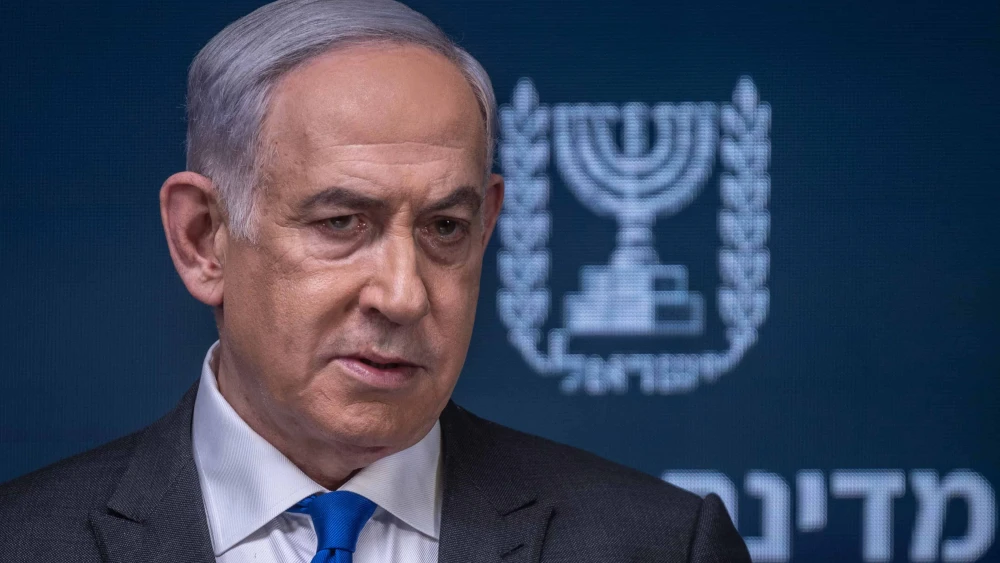
The international community must demand that Hamas free the remaining captives held in Gaza “immediately,” Israeli Prime Minister Benjamin Netanyahu said on Thursday, accusing the terrorist group of frustrating the indirect talks towards a hostages-for-ceasefire-and-terrorists-release agreement.
“Hamas is trying to hide the fact that it continues to oppose a hostage release deal and is thwarting it,” Netanyahu’s office stated. “While Israel accepted the ‘final bridging proposal’ made by the U.S. on Aug. 16, 2024, Hamas rejected it and even murdered six of our hostages in cold blood.
“The world must demand that Hamas free our hostages immediately,” the prime minister reiterated in the statement.
Secretary of State Antony Blinken told reporters in London on Tuesday that the Biden administration is determined to achieve a truce in Gaza “as soon as possible,” stressing that “the quickest way to do so remains bringing the ceasefire agreement over the finish line.”
He added, “We are working with our Egyptian and Qatari counterparts to work together to bridge any remaining gaps, and in the coming time very soon we’ll put that before the parties and we’ll see what they say.”
The optimistic comments come amid pessimism expressed in recent days by American and Israeli mediators about the prospects of a deal.
The U.S. has publicly blamed Hamas for holding up the deal, with White House National Security Communications Adviser John Kirby saying on Monday that “Hamas is the main obstacle to this right now.”
The Washington Post cited a senior U.S. official as saying last week that while the two sides had agreed to the release of terrorist murderers in exchange for Hamas freeing Israel Defense Forces troops, Hamas last week decided that civilians would also need to be exchanged for these longtime prisoners, an idea the official described as a “poison pill.”
However, Israel’s Channel 12 News reported on Tuesday that Cairo and Doha “think the opposite” and accuse Jerusalem of dragging its feet.
Netanyahu on Sept. 5 dismissed reports suggesting that an agreement was close. “In fact, while we agreed in May, in July and in August to a deal, an American proposal, Hamas has consistently said no to every one of them,” he said on Thursday.
One hundred and one hostages—alive and dead—are still held captive, 342 days after the Oct. 7 attacks. Off-and-on talks have continued for months with the United States, Egypt and Qatar acting as mediators.